




Every guide we publish
Sizing arithmetic, running costs, and the spec explanations most buying guides skip. No hands-on claims, no sponsored placements — every figure traces to a published standard.
Start here
Three guides that answer the question most people arrive with: what size do I actually need?

What Size Dehumidifier Do You Need?
Enter your room's length, width, and ceiling height to get the dehumidifier capacity you actually need. Uses room volume rather than the square-foot figures on the box, and explains why those differ. The same volume-first logic applies to air purifiers, heaters, and any appliance sized by the space it serves.
9 min read
What CADR Do You Need for Your Room?
CADR is measured in CFM and converts to room size by assuming five air changes per hour. Enter your room dimensions to get the minimum CADR, and see why the square-foot claims on the box overstate coverage.
8 min readWhat a Dehumidifier Actually Costs to Run
A 50-pint dehumidifier draws 430 to 620 watts, and the difference between models is larger than the price gap. Here is the arithmetic for a wet season, and the four things that move your bill most.
7 min readSpecs Decoded
Every box prints a number chosen under favourable conditions. Pint ratings, CADR, mAh, wattage, dB — what each one actually measures, and the test conditions manufacturers leave off the label.

The HEPA Grade Trade-off Nobody Explains
H13 and H14 filters capture more particles per pass, but denser media restricts airflow. On the same purifier, a higher grade often reduces the CADR you paid for. Here is when it helps and when it hurts.
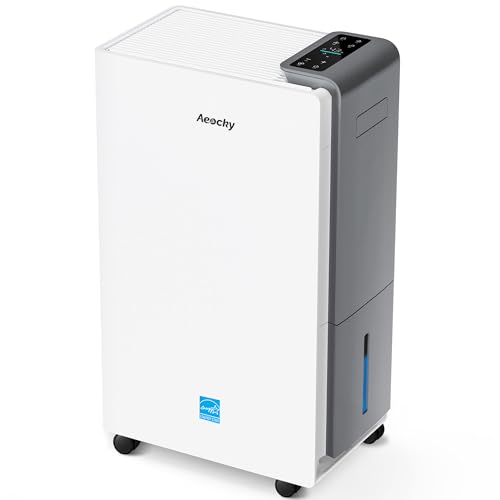
Peltier Dehumidifiers: Why the Cheap Ones Don't Work
Thermoelectric dehumidifiers are sold as compact, quiet, and cheap. At the capacities they actually deliver, they are none of those things usefully. Here is the arithmetic.
Sizing
The most expensive mistake is buying the wrong size, not the wrong brand. Work the number out from your room, your load, or your device — then see which models actually clear the bar.

How Much Battery Capacity Do You Need?
Pick the appliances you want to keep running and the calculator returns the nominal capacity you must buy — not the usable energy you need. Those differ by about 24%, and that gap is where most buyers get it wrong.
What Size Dehumidifier Do You Need?
Enter your room's length, width, and ceiling height to get the dehumidifier capacity you actually need. Uses room volume rather than the square-foot figures on the box, and explains why those differ. The same volume-first logic applies to air purifiers, heaters, and any appliance sized by the space it serves.
What CADR Do You Need for Your Room?
CADR is measured in CFM and converts to room size by assuming five air changes per hour. Enter your room dimensions to get the minimum CADR, and see why the square-foot claims on the box overstate coverage.

What a Dehumidifier Pint Rating Actually Measures
Pint ratings are measured at 65°F and 60% relative humidity, and the standard changed in 2019. Here is how to compare an old unit against a new one, and why the number on the box is optimistic for most basements.
Running Costs
Purchase price is the smaller number. Electricity, filters, replacement parts and consumables over three years — so the cheap option stops looking cheap.
What a Dehumidifier Actually Costs to Run
A 50-pint dehumidifier draws 430 to 620 watts, and the difference between models is larger than the price gap. Here is the arithmetic for a wet season, and the four things that move your bill most.

What Air Purifier Filters Actually Cost Per Year
Filter replacement often costs 30 to 50 percent of the purifier's price every year. Here is how to calculate total cost of ownership before you buy, with worked examples for common models.
Trade-offs
Every spec you pay for costs you something else — noise, weight, size, heat, or a larger battery you will never drain. Here is what you give up for each one.

Noise vs Airflow: Why the Quiet Setting Doesn't Clean
Every air purifier and dehumidifier is rated at its loudest setting and sold on its quietest. Here is the decibel-to-CFM relationship, and how to find the speed you will actually live with.
Capacity vs Portability: The Weight You Actually Carry
Bigger batteries, bigger tanks, bigger units — every increase in capacity adds weight you will carry. Here is how to work out whether the extra capacity is worth the extra kilos.
Price Per Usable Wh: The Only Number That Compares Power Stations Fairly
A 2048Wh station and a 1024Wh station are not two prices for two products — they are four prices for the same energy. We divided 20 real listings by their usable watt-hours, and the spread is 8.5x.
400W of Solar Input Is Not 400W: What You Actually Collect
A 400W panel rating assumes overhead sun, a cold panel and no cable loss. In practice you collect 55–78% of it across the year. Here is the arithmetic, and how many days it really takes to refill a 10kWh station.
Cost Per Camera: Why a $699 Six-Cam Kit Beats a $599 Single Camera
Every security camera we track is sold as a kit, so the sticker price tells you nothing. Divide by the number of cameras and the spread is 5.1x — from $117 to $599 per lens.
Translator Earbuds vs a Meeting Hub: The $315 Buys People, Not Accuracy
Two translation devices, $449 and $764, sharing the same underlying engine. The difference is not how well they translate — it is how many people can be in the room.
Room & Use Guides
A basement, a bedroom, a desk, a car, a boat. The room decides the machine more than the floor area does.

Getting a Bedroom Purifier Right
Bedrooms are small enough that most purifiers are oversized, and the deciding spec is noise at low speed rather than maximum CADR. Here is how to size and choose one you will actually leave running overnight.

What a Basement Actually Needs
Basements combine cold temperatures, low ceilings, and often active moisture. That combination breaks the standard sizing advice, which assumes 8 ft ceilings and 65°F.
Browse by tag
Tags appearing on two or more guides. Single-use tags are omitted rather than padding the list.
All tags
Click a tag to jump to its guides.
Follow updates
No newsletter, no email capture. Just an RSS feed you can drop into any reader.
About this blog
How often is this site updated?
Every guide is reviewed when a relevant standard changes or when product data shifts. The most recent update across all 16 guides was 2026-11-19. Each article shows its own updated date at the top.
Why do you publish arithmetic instead of hands-on reviews?
Because most sizing errors are arithmetic mistakes, not product quality issues. A dehumidifier rated at 50 pints is rated at 65°F — if your basement runs at 55°F, no amount of testing changes the fact that you need a bigger unit. We show the calculation so you can check it against your own room.
Do the calculators store my room measurements?
No. Everything is computed in your browser. Nothing is transmitted to us and nothing is stored.